


After the war with Hamas began, educators at Bnot Harama Girls’ High School in Jerusalem felt compelled to find a way to help students cope with grief and chaos. With so much fear in the air, they shouldered the responsibility of somehow giving strength, even if they had no strength to give.
During an initial staff zoom call, over two dozen educators divided up the student list and personally called all 150 students to check in. Daily virtual meet-ups were set up to keep the girls connected with teachers and each other. It was the chizuk students desperately needed to get through the day. All this while teachers also juggled families and rocket attacks.
A week and half later, Bnot Harama reopened for in-person classes. Housed in a newer building, the school was fortunate to have shelters which met safety requirements necessary in the face of ongoing rockets. Just as many in the school community now hosted displaced family and friends in their homes, Bnot Harama somehow managed to host an entire school which was lacking a shelter, and otherwise would have been unable to reopen.
It was during this period of national and personal trauma, massive military mobilization, and upheaval at work and at home, that Assistant Principal Mrs. Tehilla Lichtenstein reconnected with her dear friend Mrs. Dina Feldman, the girls’ General Studies Principal at Torah Academy. As a fellow school administrator, Mrs. Feldman empathized deeply with Mrs. Lichtenstein and her staff. Mrs. Feldman understood that her sisters in chinuch felt as panicked as anyone, yet as leaders, they had to be strong for their students and their families.
Her sisters in chinuch felt as panicked as anyone, yet as leaders, they had to be strong for their students and their families.
Inspired by the strength of these teachers, Mrs. Feldman thought of a beautiful way to connect with them across great distances. She emailed the TA staff about Bnot Harama, suggesting they collect letters to go along with contributions toward gifts for their Israeli counterparts. The response from TA staff was strong. Thus, the “Teachers Supporting Teachers” Initiative was born. When the first batch of heartfelt letters and gifts arrived at Bnot Harama just a few weeks later, the teachers were profoundly touched. Many were moved to tears.
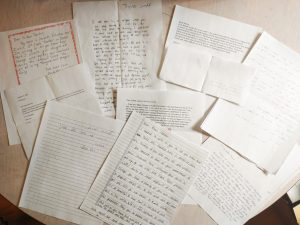
Letters from teachers in the U.S.

Lovely self-care gifts
To the teachers, explained Mrs. Lichtenstein, the gifts meant, “You are cared for. You are important. You are not in this pain alone.” That was a recurring theme in the letters, and the messages were received with open hearts. Even though their sisters in America were far away, it felt as if they were standing beside them.
“You are cared for. You are important. You are not in this pain alone.”
Mrs. Feldman worked to spread word of the Initiative to schools across the US. Several quickly signed up to be matched with sister-schools in Israel, including one school which sent in over 100 letters!
Coordinating efforts in Israel, Mrs. Lichtenstein chose schools across the country experiencing acute hardship. In Petach Tikva and Ashdod, cities targeted with huge numbers of rockets, educators were so appreciative of the support. At another school, where the beloved principal was tragically killed in a terrorist attack on the way to work, the initiative sponsored a beautiful program to give chizuk to teachers after the shloshim.
Reflecting on the initiative, Mrs. Lichtenstein emphasized the power of small acts of kindness amid devastation. “When big tragedies hit, it’s natural to focus on addressing the areas of greatest need. Often, the ripples of pain around it are overlooked. This initiative is a response to that. Its beauty comes from remembering the other circles affected. It gives room for their pain as well.”
As the war against Hamas continues, teachers and students in Israel adapt to uncertainty. Teachers work on keeping students engaged in helping others, and focused on what’s in front of them. In the midst of adversity, moros in Israel draw on untapped inner strength to fulfill their higher calling: chinuch habanos (girls’ Jewish education). They know in their hearts that their sisters in America are with them, davening for their success, and sending love and support.
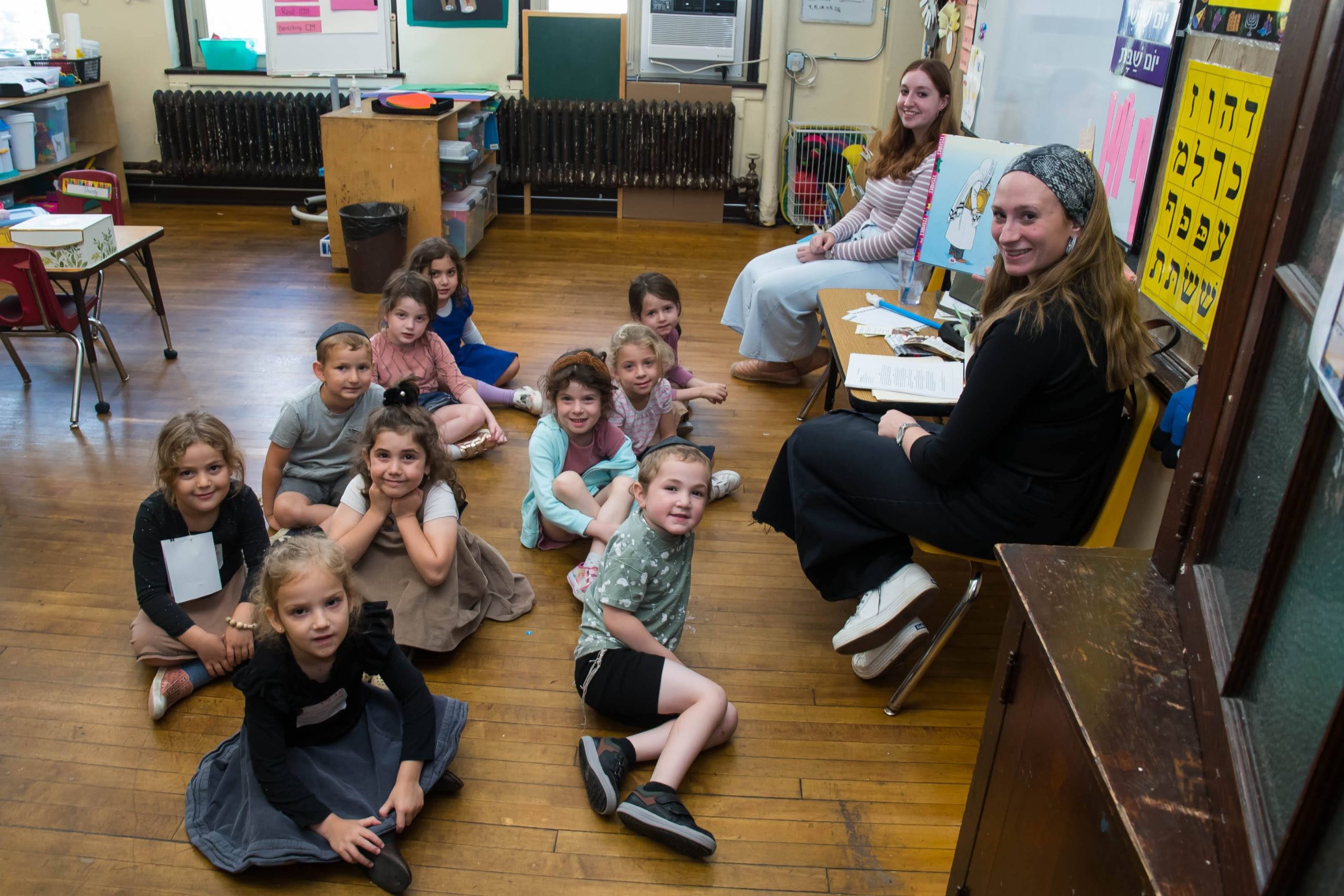
Teachers incorporated age-appropriate lessons on the power of children’s tefillos and mitzvos to uplift and protect our entire nation. This empowering message was translated into action from the youngest grades through the oldest.
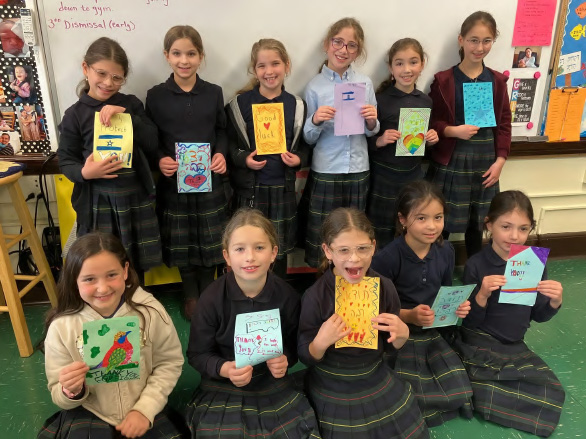
Middle school girls participated in the national Torah U’Mesorah letter writing campaign to Israeli soldiers. Their letters joined with thousands of others from students from across the US.

Third grade made a bulletin board in their classroom titled, “What Can We Do?” and decorated it with mitzvos they chose to take on in merit of Israeli soldiers.